The ‘Analog’ Rebellion: Why 2026 is the Year of the Digital Detox (And How to Start)
Do you ever feel a knot in your stomach when you unlock your phone? You swipe through a blur of bad news, absurd AI-generated content, and endless ads, wondering where the last hour went. You aren’t alone.
We are living through a collective “great exhaustion.” The constant scroll is no longer a pleasure; for many, it has become a compulsion. But a powerful counter-movement is gaining serious momentum in 2026. It’s called the “Analog Rebellion.”
It isn’t about smashing your smartphone or moving to a cabin in the woods (unless you want to!). It’s about reclaiming your time and attention. It’s about choosing “friction” over the frictionless, dopamine-driven loop of the algorithm. And the data proves it’s the hottest trend in the US right now.
Why ‘Analog’ is the New Luxury
In a world where everything is instant, slow has become a status symbol. According to recent search data, the term “analog hobbies” has seen a 160% increase in search interest. People aren’t just vaguely interested in disconnecting; they are desperately searching for how to do it.
Major outlets like the Dayton Daily News have picked up on the trend, noting that “switching off will see the ultimate luxury in 2026.” Why? Because in an economy driven by attention, the ability to reclaim your focus is the most valuable asset you can own.
The internet was supposed to connect us, yet we’ve never felt more isolated. The “Analog Rebellion” is the answer. It’s about trading the ephemeral for the tangible.
Also Read: 14 Best Apps to Earn Money by Walking
The Three Pillars of the Analog Boom
If you look at what people are actually buying and searching for, the trend splits into three distinct areas. This isn’t just philosophy; it’s a shift in consumer behavior.
1. The Rise of ‘Slow’ Hobbies
The biggest winners in the analog shift are the crafts we forgot we loved.
- Needlepoint & Crochet: Searches for “beginner needlepoint items” are up 208% year-over-year. “Crochet sweaters” have climbed 162%. TikTok and Instagram—ironically—have been primary drivers here, with users showing off the meditative process of creating something stitch by stitch.
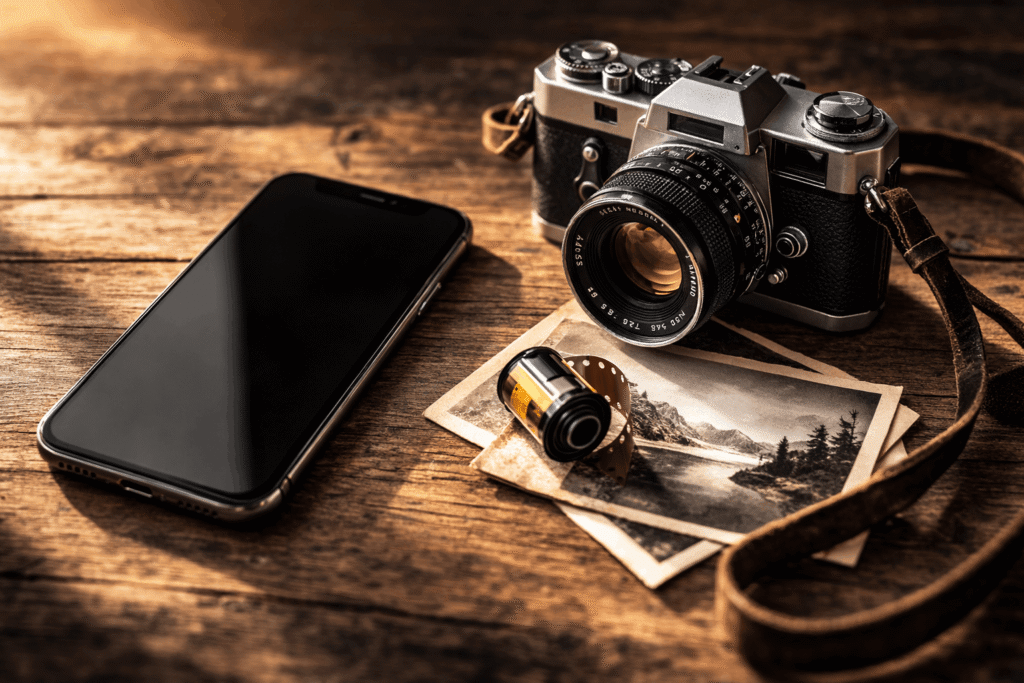
- Film Photography: While phone cameras get sharper, many are reaching for grainy 35mm film cameras. The act of waiting for film to be developed turns photography from a snap-and-forget activity into a mindful, rewarding experience.
2. The Digital Detox Toolkit
People are now buying physical products to help them disconnect from digital ones.
- “Analog Bags”: There is a booming market for stylish pouches designed specifically to hold your phone during dinner or social gatherings. It’s a physical barrier that signals, “I’m present right now.”
- Alarm Clocks: The old-school alarm clock is making a comeback as people stop using their phones as alarm clocks to avoid the morning scroll.
3. The ‘Slow Punk’ Mindset
There is a growing cultural movement treating slowness as a radical act. It involves seeking out “third spaces” that aren’t digital—like listening bars (venues dedicated to high-quality, quiet music listening), book clubs, and phone-free events.
How to Join the Rebellion: A 4-Step Guide
If you are ready to step away from the screen but don’t know where to start, here is your practical roadmap.
Step 1: Start Small, Not Expensive
Don’t go out and buy a $500 film camera or a professional knitting machine yet.
- The Action: Buy a simple adult coloring book and high-end pencils, or a beginner’s crochet kit from a local craft store.
- The Goal: The goal is to occupy your hands for 20 minutes without looking at a screen. The tactile sensation is the therapy.
Step 2: Designate Phone-Free Zones
Your environment dictates your habits. Make it hard to reach for your phone.
- The Action: Implement a “no-device” rule at the dinner table. Buy a $10 alarm clock and move your phone charger out of the bedroom.
- The Goal: Separate your physical spaces from digital intrusion.
Step 3: Curate, Don’t Delete
Going cold turkey on social media often leads to failure and rebound anxiety.
- The Action: Unfollow accounts that make you feel anxious or angry. Seek out quieter spaces like specific Discord communities built around hobbies, or subscribe to long-form newsletters on Substack that feel more like reading a magazine than scrolling a feed.
- The Goal: Change the quality of your digital intake before changing the quantity.
Step 4: Embrace Boredom
This is the hardest step. We panic when we have a spare five minutes without a screen.
- The Action: The next time you are waiting in line for coffee or sitting alone, resist the urge to pull out your phone. Just look around. Let your mind wander.
- The Goal: Boredom is the birthplace of creativity. It’s where the impulse to pick up that crochet hook or write in a journal comes from.
Also Read: Google Admin Console Login Guide
The Bottom Line
The “Analog Rebellion” isn’t about hating technology. After all, you are likely reading this on a screen right now. It’s about balance. It’s about remembering that life happens in the moments between the scrolls—in the feel of yarn between your fingers, the grain of a photograph, or the uninterrupted conversation with a friend.
In 2026, the most disruptive thing you can do is put down your phone and pick up a hobby that doesn’t require a charger.
Are you ready to unplug? Which analog hobby are you most excited to try? Let me know in the comments below!

admin